Understanding
10 Asanas for Apana Vayu & PCOD
A gentle 20-minute sequence for women with PCOD, PCOS or irregular periods. It opens the pelvis, settles the belly and calms the mind, so that apana vayu flows downward again.
Helps with

By PranaJiva
Editorial Team

- Form
- Yoga sequence (10 asanas)
- Time
- About 20 minutes
- Level
- Beginner
- Best time
- Morning, on an empty stomach
- Suits
- All doshas, especially Vata and Kapha
In Part 1 we looked at how apana vayu and PCOD are linked. Apana is the downward-moving air of the lower belly. Its job is to carry stool, urine and menstrual flow down and out. When it stalls, or turns upward, periods slow down or stop, Kapha builds up and the hormonal rhythm drifts.
This sequence doesn't force anything. It gives apana room to move in the direction it is meant to.
What you need
- A yoga mat
- A firm cushion or bolster (for poses 8 and 9)
- A wall (for pose 9)
- An empty stomach: at least 3 hours after a meal
- Loose, comfortable clothing (optional: a folded towel for under the knees)
How to do it
Move slowly and breathe through your nose. If something pinches, ease off. Stretch only to a comfortable edge, never to pain.
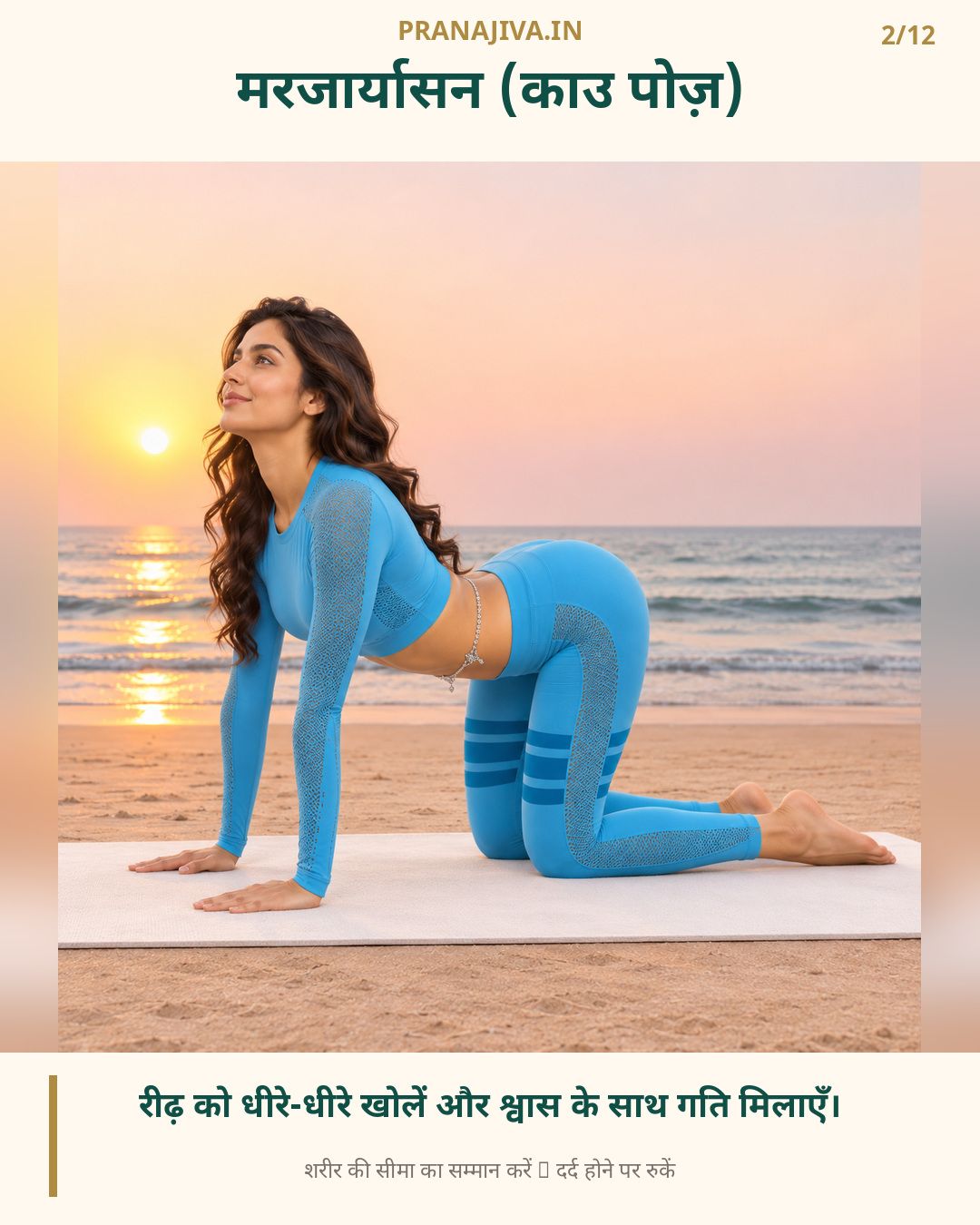
1. Marjariasana (Cat-Cow): 10 rounds, about 1 minute
Come onto hands and knees. Breathe in and let the belly drop as the chest lifts. Breathe out and round the back towards the ceiling. This wakes up the lower spine, where apana's flow begins, and gives the belly organs a gentle massage.
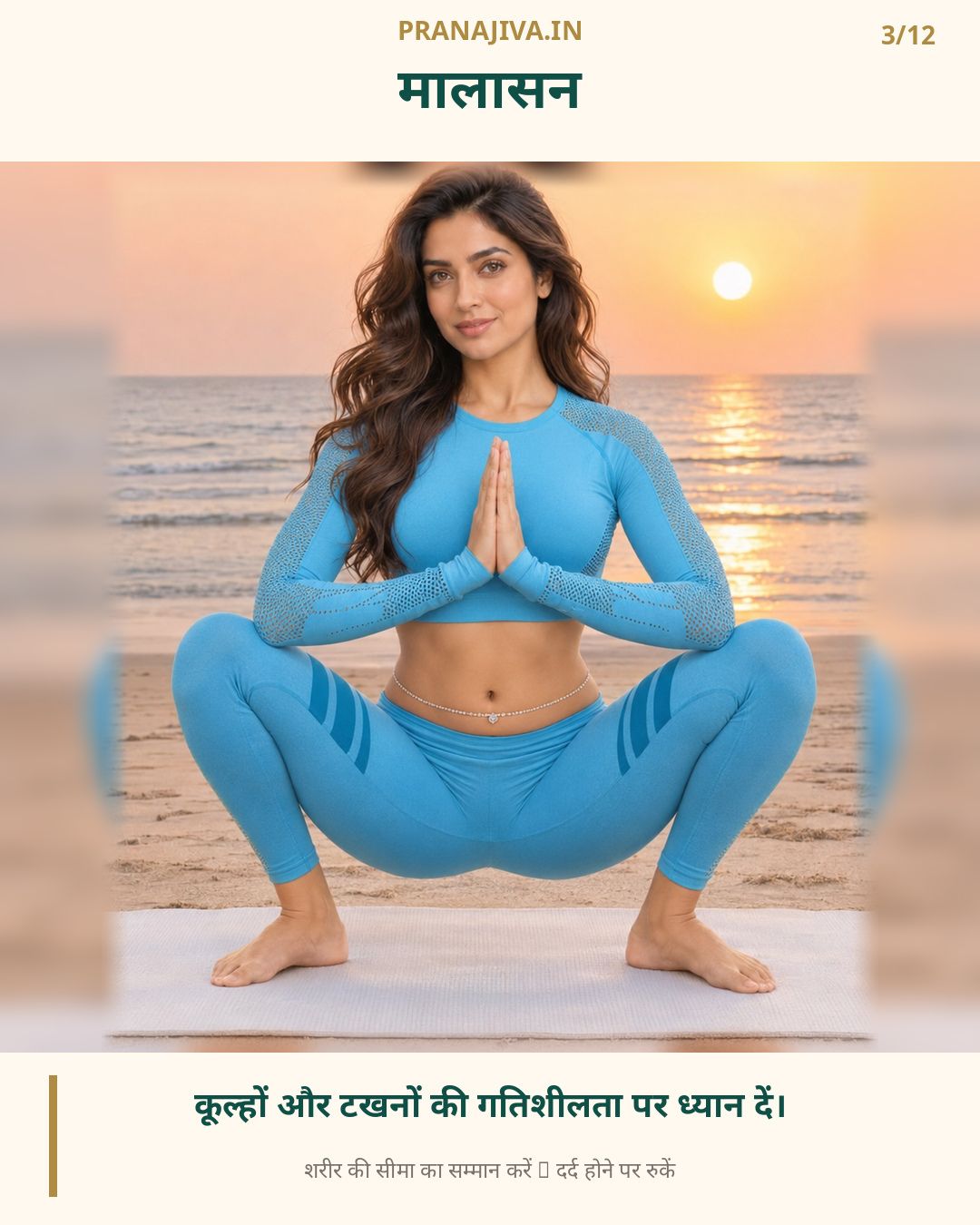
2. Malasana (Garland Pose): 30 seconds
Sit into a deep squat with heels down and palms joined at the chest. Use your elbows to press the knees gently apart. This is the most direct pose for apana: it opens the pelvic floor and draws circulation towards the uterus.
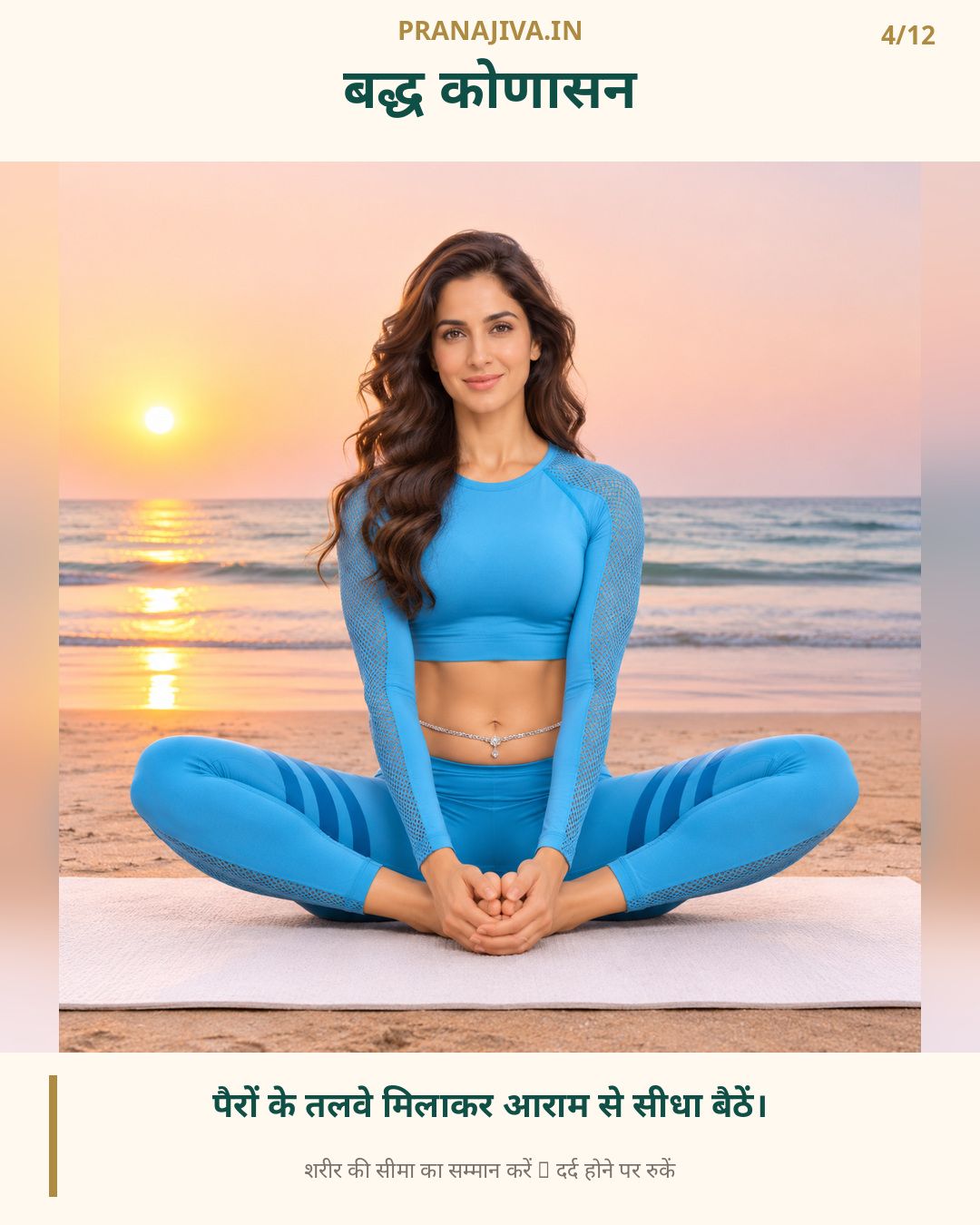
3. Baddha Konasana (Butterfly / Titli): 1 minute
Sit with the soles together and hold your feet. Let the knees drop. Fresh circulation reaches the ovaries, and stagnant Kapha loosens.
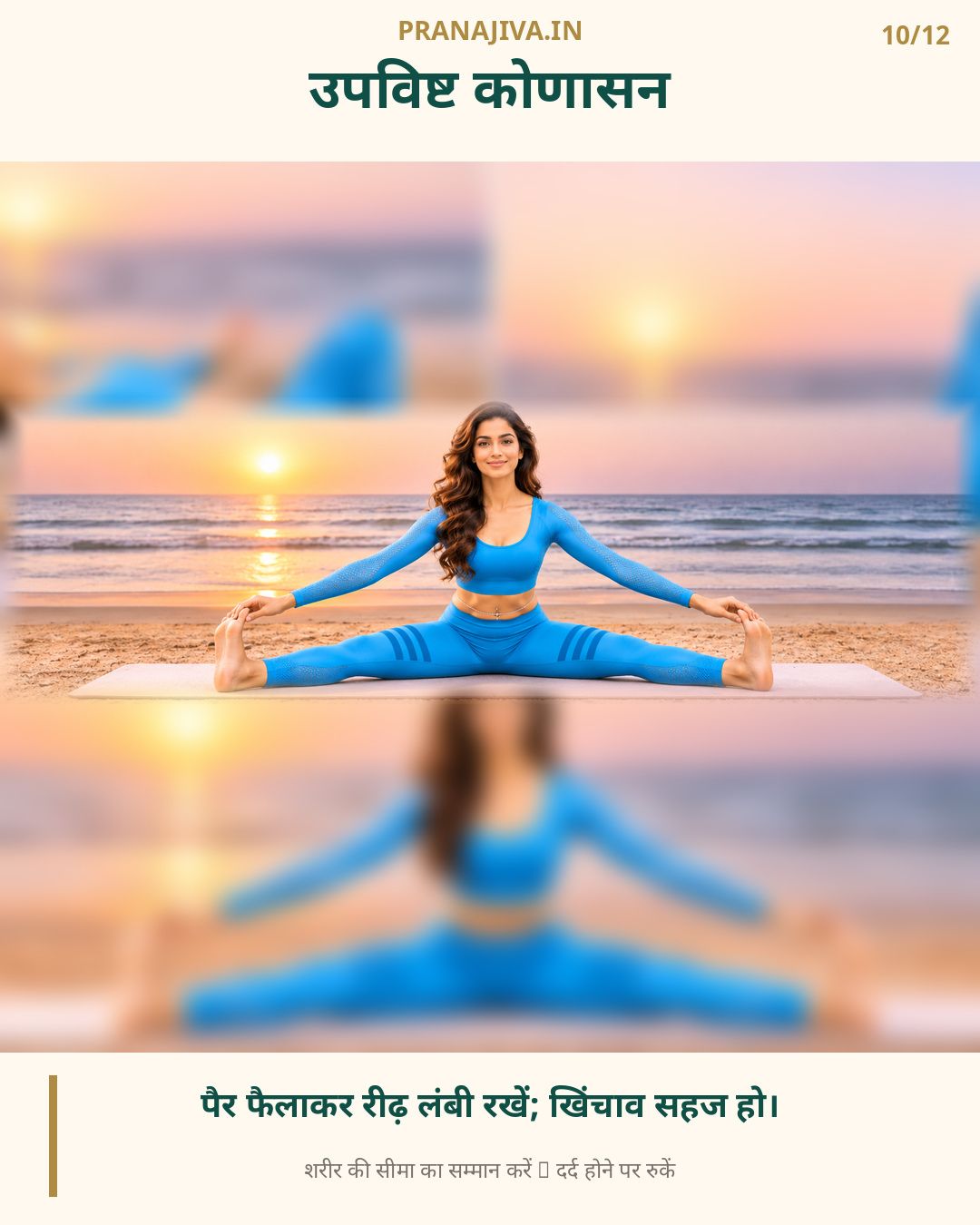
4. Upavistha Konasana (Wide-Leg Seated Pose): 30 seconds
Spread the legs wide, keep the spine long and hold your toes or shins. Both sides of the pelvis stretch, making space for apana to move freely.
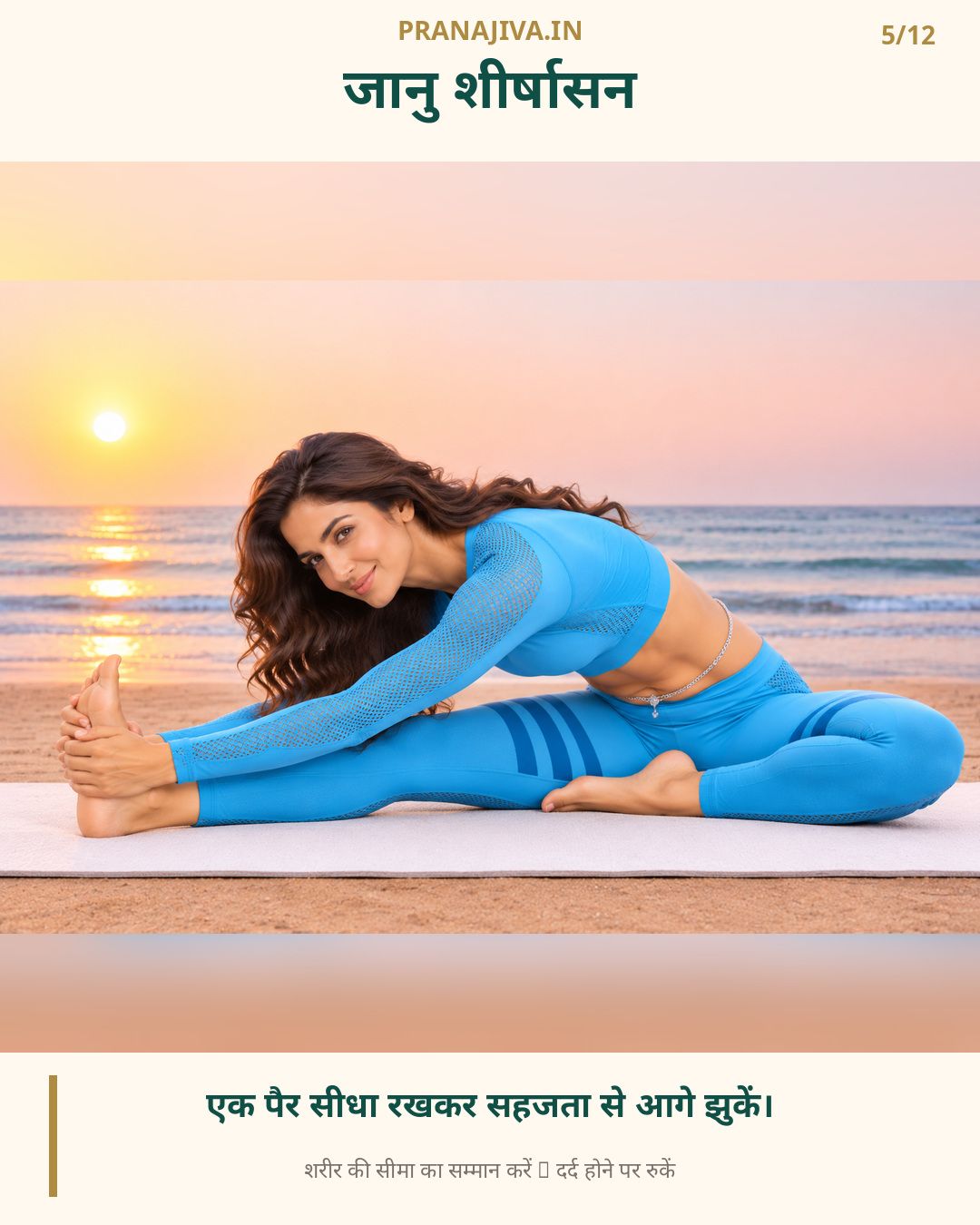
5. Janu Sirsasana (Head-to-Knee Pose): 20 seconds each side
Stretch one leg out, fold the other in and lean forward over the straight leg. This gives the lower belly light pressure and supports digestive fire (agni). Ayurveda holds that apana can't flow well while agni is weak.
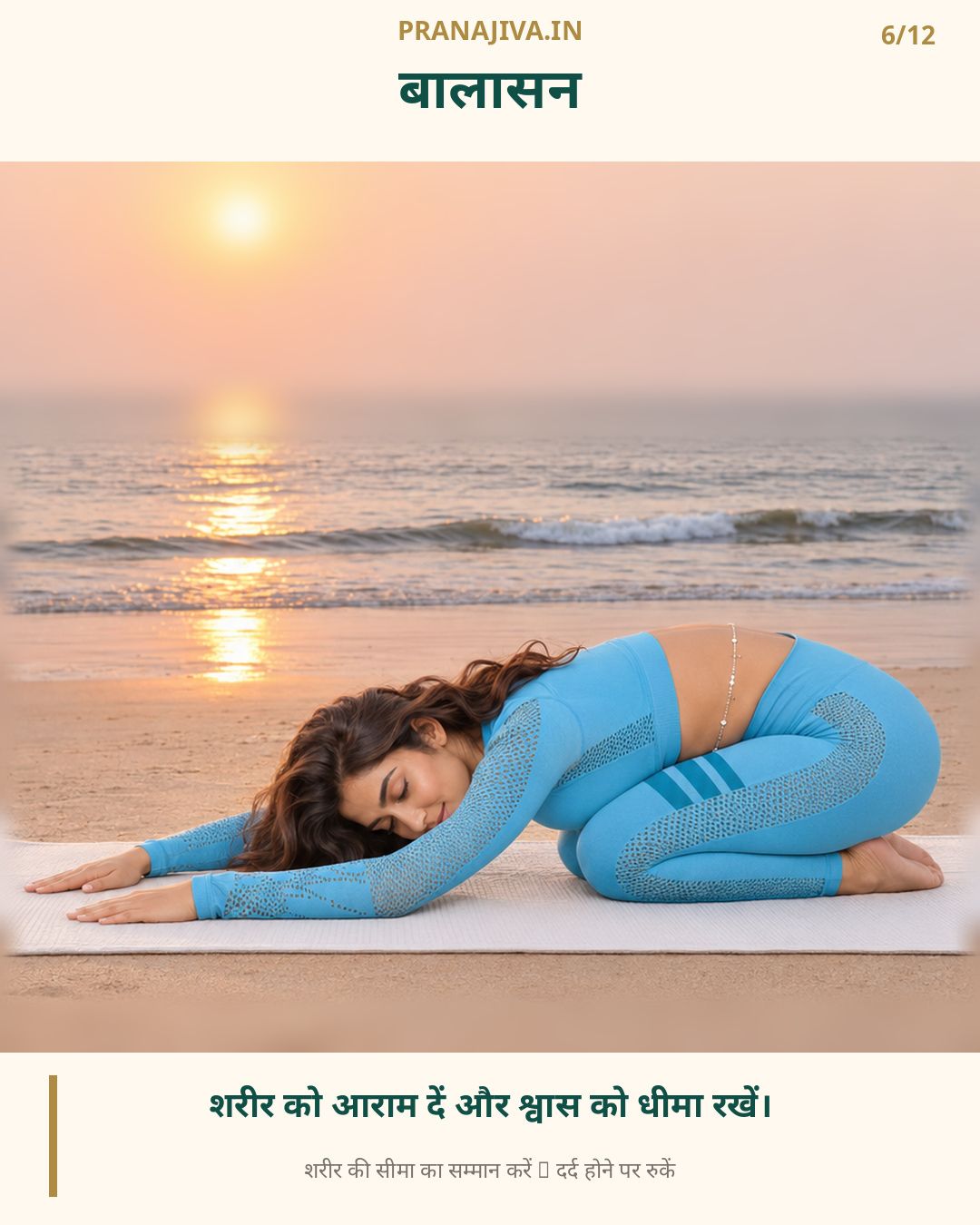
6. Balasana (Child's Pose): 1 minute
Sit back on your heels, rest your forehead down and stretch your arms ahead. Stress unsettles apana more than almost anything, and this pose quiets the nervous system while the belly rests on the thighs.
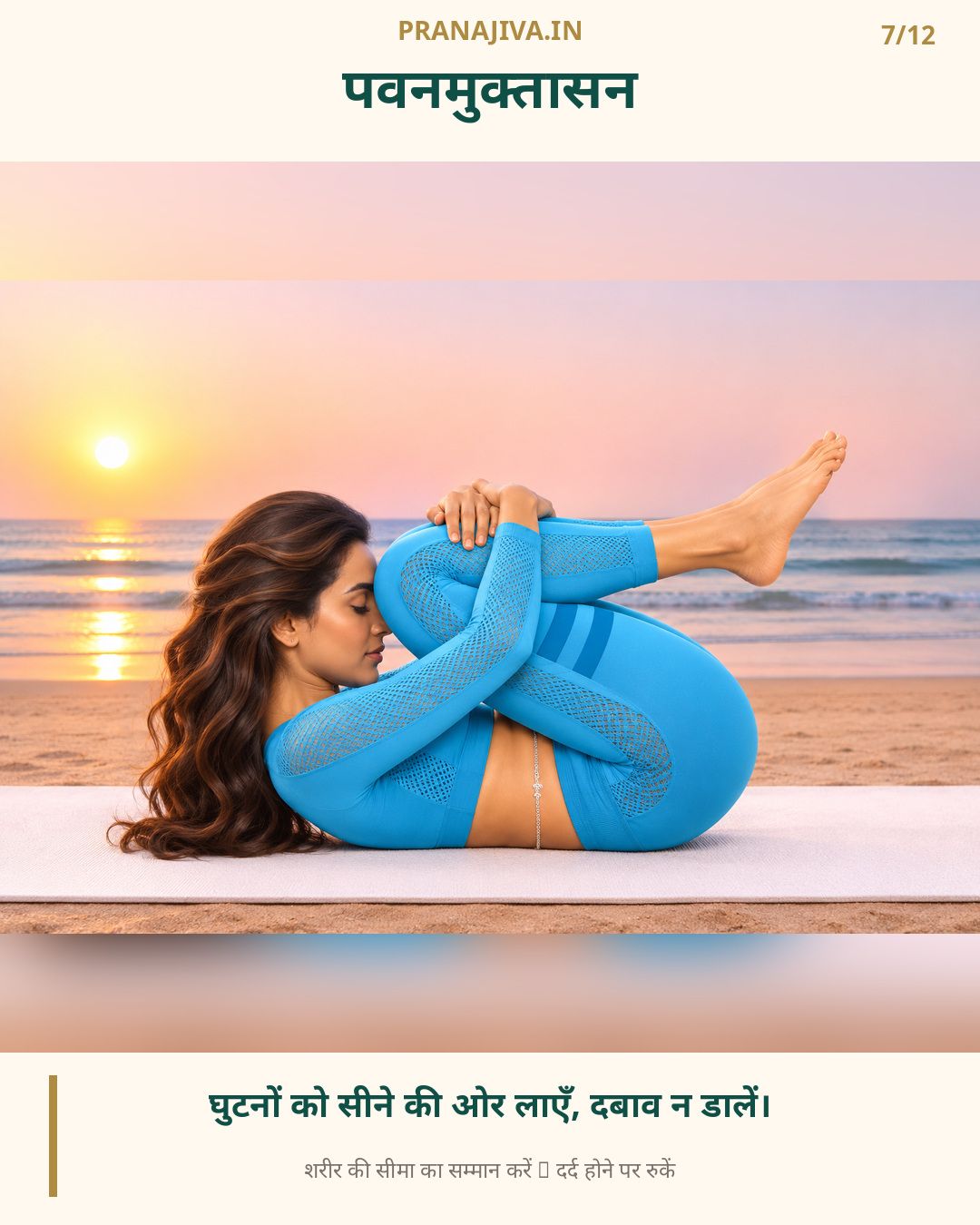
7. Pavanamuktasana (Wind-Relieving Pose): 20 seconds, 3 times
Lie on your back, hug both knees to your chest and bring your head towards the knees. Trapped gas moves down and out, and the flow of apana steadies.
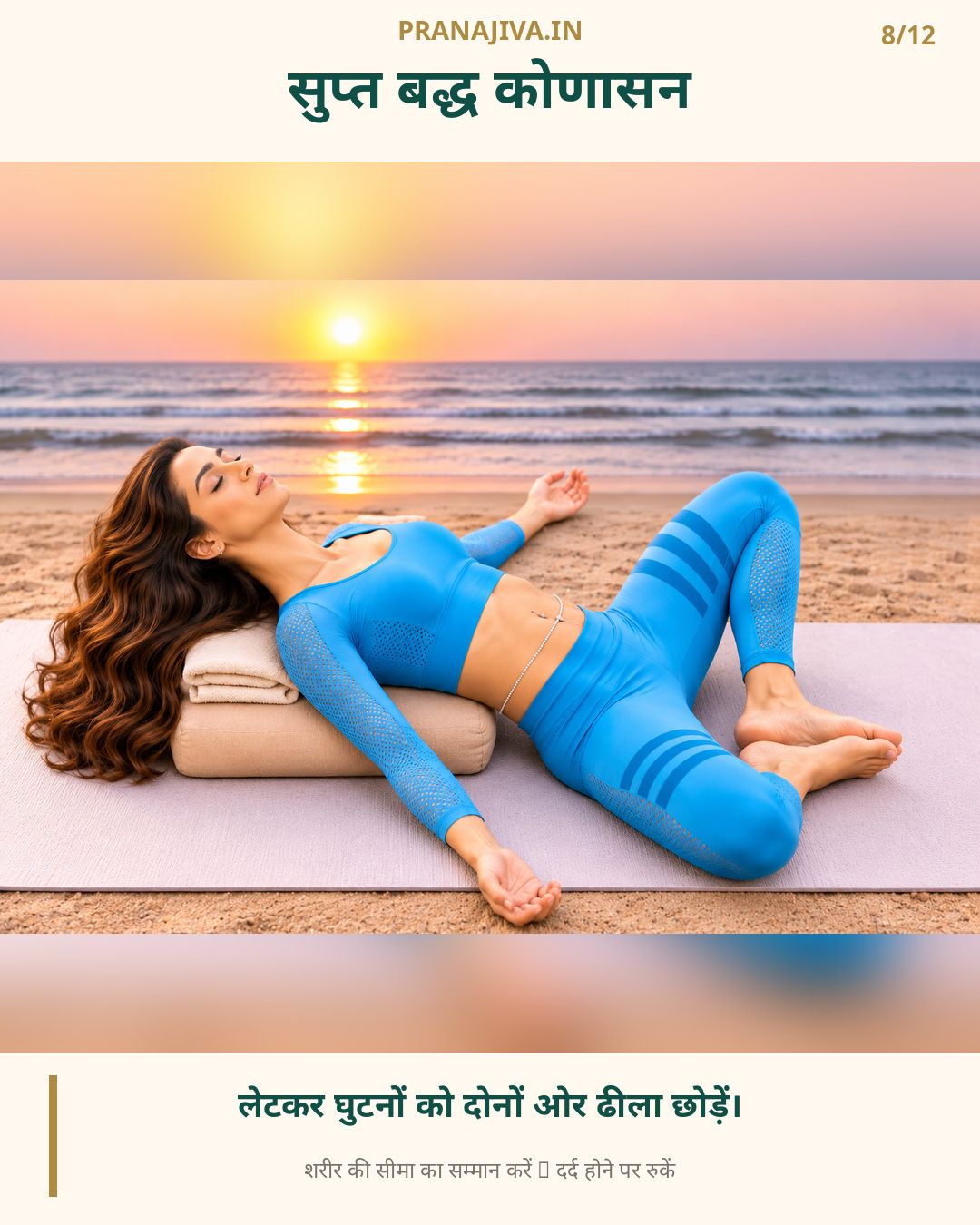
8. Supta Baddha Konasana (Reclined Butterfly): 2 minutes
Lie back over a cushion with the soles together and the knees falling open. The pelvis stays open while the mind slips into deep rest, and rest matters for hormonal balance as much as effort does.
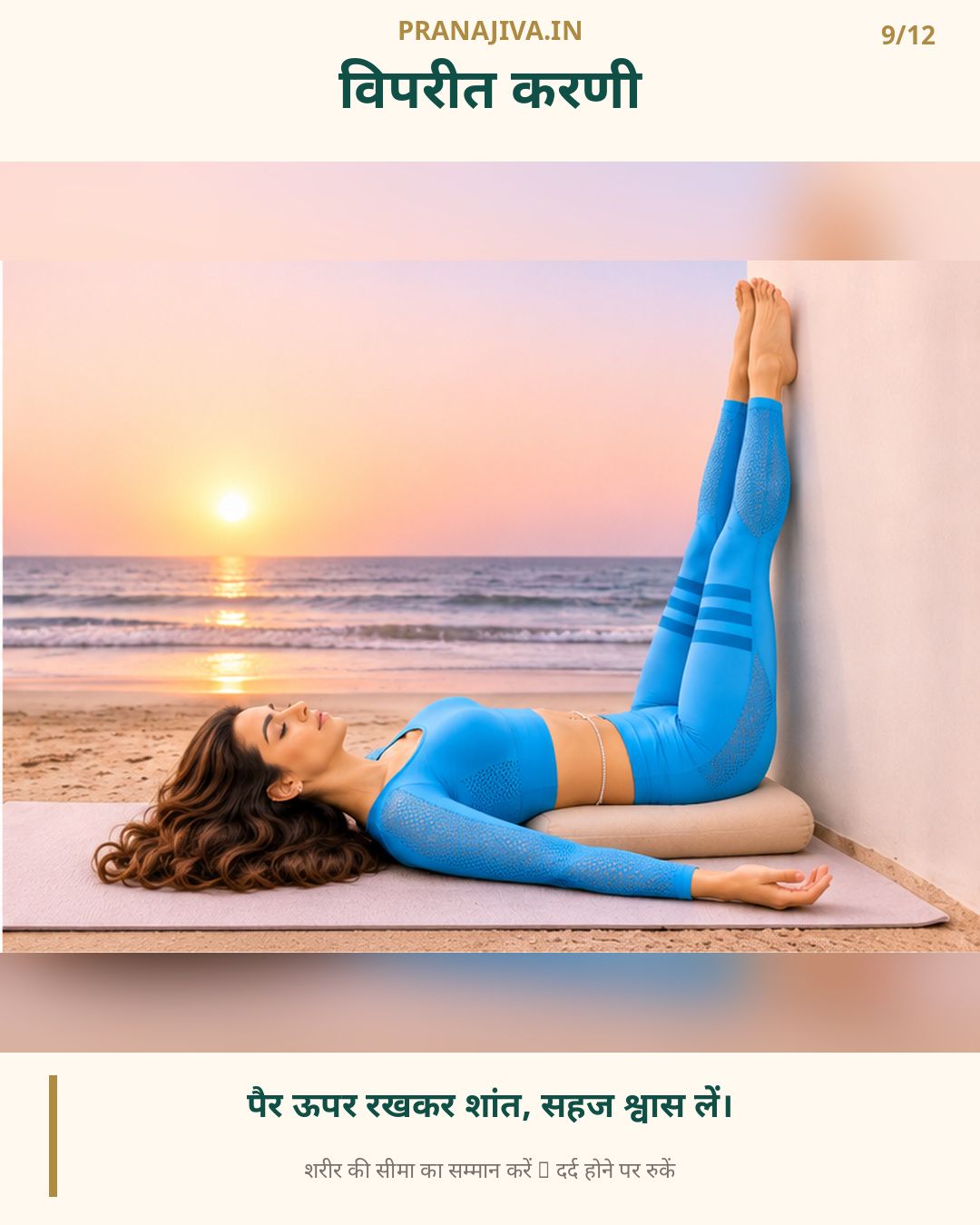
9. Viparita Karani (Legs-up-the-Wall): 3–5 minutes
Put a cushion under your hips and rest your legs up the wall. Tired legs drain, sleep improves and circulation that has pooled in the pelvis begins to move again. Skip this pose during your period.
10. Dhyana Mudra (seated meditation): 3–5 minutes
Sit comfortably with your hands in Gyan Mudra. Make each out-breath twice as long as the in-breath. In Ayurveda, a long, slow exhale guides apana downward.
How much, and how often
Practise once a day for about 20 minutes. Morning is best, but an early evening session on an empty stomach also works. PCOD did not build up in a day and it will not settle in one. Give the routine at least three months of steady practice before you judge it.
Why it works
Apana vayu lives in the pelvis and lower belly. Ayurveda says it moves well when three things are true:
- there is space in the area,
- digestion is steady,
- the mind is not braced against stress.
The sequence works on each of these in turn:
- Space: Malasana and the two butterfly poses open the hips and pelvis.
- Digestion: Janu Sirsasana and Pavanamuktasana press gently into the belly and support agni.
- Calm: Balasana, the reclined poses and the long-exhale meditation take the body out of "alert" mode.
Why these poses are done together
Each pose on its own is useful. The order is what makes it a practice:
- Warm up: Cat-Cow.
- Open: the squat and seated poses.
- Press: the forward folds and the knee hug.
- Settle: the reclining poses.
- Direct the breath downward: the closing meditation.
That last step, the long exhale, is the thread that ties it all to apana.
Before you try this
Do not do:
- Viparita Karani during your period.
- Pavanamuktasana and Janu Sirsasana during pregnancy. Practise the other poses in pregnancy only under a trained yoga teacher's guidance.
Take care:
- If you have knee, hip or lower-back pain, use cushions and keep the range small.
- Don't hold your breath in any pose.
- If anything causes sharp pain, come out of the pose gently.
During your period: Keep everything soft. Child's Pose, both butterflies and the meditation are the kindest choices on heavy days.
Children: This sequence is written for adults. Teenage girls can do the gentler poses with an adult teacher present.
How long is too long: Stick to the hold times given. Holding longer doesn't speed anything up, and steady daily practice matters far more.
This is traditional knowledge shared for learning, not a prescription. If you are pregnant, nursing, giving this to a child, on regular medication, or if symptoms are severe or don't settle, take personal guidance from a qualified practitioner.
This is traditional Ayurvedic guidance shared for general wellbeing. It is not a diagnosis and not a substitute for medical advice. If a symptom is severe, persistent or worsening, or you are pregnant, taking prescribed medicine or managing a diagnosed condition, speak to a qualified doctor before trying it.
Pairs well with this
Other ways to approach the same thing.
- Understanding· Women's Health
Shatavari, Shatapushpa & Dalchini — three herbs Ayurveda turns to for PCOD and PCOS
One root, one seed, one kitchen spice — and a fifteen-minute habit that matters as much as any of them.
- Understanding· Women's Health
Dalchini, Shatavari and Ashoka — Three Ayurvedic Allies for PCOD
Think of PCOD as a machine that has jammed in three places. Ayurveda names a herb for each.
- Understanding· Women's Health
PCOS "Cysts" — The Eggs That Never Opened
Those "cysts" on a PCOS scan are usually not cysts at all. They are follicles that started growing and then stopped.
More in Women's Health
- Understanding· Women's Health
Shatavari, Shatapushpa & Dalchini — three herbs Ayurveda turns to for PCOD and PCOS
One root, one seed, one kitchen spice — and a fifteen-minute habit that matters as much as any of them.
- Understanding· Women's Health
Dalchini, Shatavari and Ashoka — Three Ayurvedic Allies for PCOD
Think of PCOD as a machine that has jammed in three places. Ayurveda names a herb for each.
- Understanding· Women's Health
PCOS "Cysts" — The Eggs That Never Opened
Those "cysts" on a PCOS scan are usually not cysts at all. They are follicles that started growing and then stopped.