Remedy
Amla & Ginger Tea
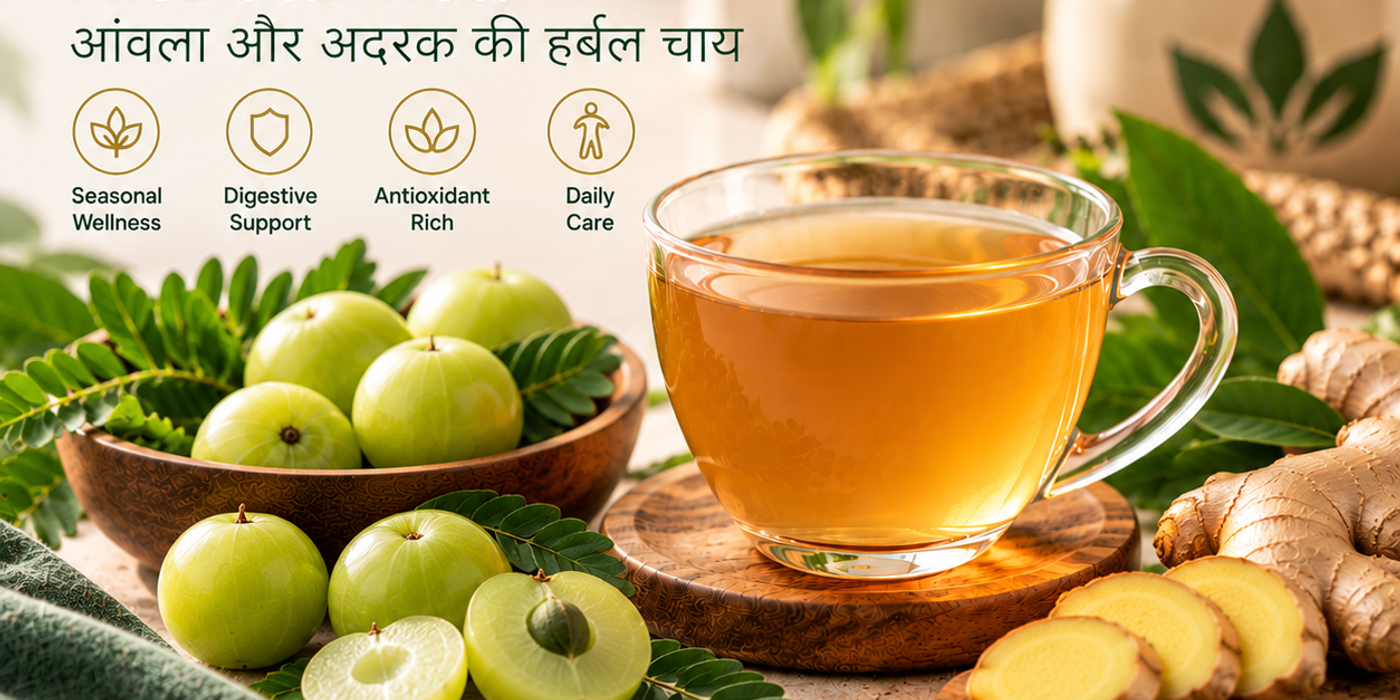
A tangy, lightly warmed infusion pairing fresh Indian gooseberry with a small amount of ginger.

By PranaJiva
Editorial Team
- Form
- Tea or drink
- Preparation
- 10 minutes
- Makes
- 2 cups
- Best time
- Morning, After food
What you need
- 2 cups Water
- 1 small Fresh amla (Indian gooseberry) (washed, deseeded and roughly chopped)
- ¼ inch Fresh ginger (thinly sliced)
- ½ tsp in total Jaggery (stirred in while warm, optional)
How to make it
Wash the amla, deseed it and chop it roughly. Slice the ginger.
3 minutes
Bring the water to a boil and add the ginger.
1 minute
Simmer gently.
3 minutes
Switch off the heat, add the amla, cover and leave it to steep. It is added off the heat on purpose.
2 minutes
Strain, sweeten with the jaggery if you want to, and drink it warm.
1 minute
How much, and how often
One cup, occasionally, as a food-level infusion. There is no dose here and nothing to take it for on a schedule.
Best taken: Morning, After food
When to expect a change: The sourness is immediate. No claim is made about vitamin C or immunity — see below for why that claim is harder to make than it looks.
Why it works
Why the amla goes in off the heat
Amalaki is one of the most important single ingredients in Ayurveda — the first of the three fruits in triphala, and a rasayana in its own right. Ginger here is mostly contrast: a little warmth and aroma against what is otherwise an aggressively sour fruit.
Amla is famous for its vitamin C content, and that is exactly the claim this recipe does not make. Vitamin C degrades with heat and with time, and nobody has measured what survives this particular process — so the honest answer is that we do not know, and a page that tells you it is a vitamin C drink is telling you something it has not checked. Adding the fruit after the pan is off the flame is the sensible precaution either way, and it also keeps the tea from turning bitter.
Before you try this
Do not use if
- You are allergic or intolerant to amla or to ginger
Take care
- Sour enough to irritate a sensitive stomach, and hard on tooth enamel. Rinse your mouth with plain water afterwards.
- Check with your doctor about any medication-specific concerns. Amla is taken alongside a great many things in traditional practice, which is not the same as being known to be safe alongside them.
- Pregnancy, breastfeeding & children
- Eating amla as a food is one thing; a habitual medicinal preparation is another. Ask a professional before using this routinely in pregnancy, while breastfeeding, or for a child.
- How long is too long
- Occasional use. Stop if it is uncomfortable, and get persistent symptoms assessed rather than brewing through them.
This is traditional Ayurvedic guidance shared for general wellbeing. It is not a diagnosis and not a substitute for medical advice. If a symptom is severe, persistent or worsening, or you are pregnant, taking prescribed medicine or managing a diagnosed condition, speak to a qualified doctor before trying it.
More in Teas & Decoctions
- Remedy· Teas & Decoctions
Cumin, Coriander & Fennel Tea
A gently spiced, caffeine-free seed infusion, traditionally taken after meals as part of an Ayurvedic digestive routine.
Tea or drink · 12 min to make
- Remedy· Teas & Decoctions
Ajwain & Saunf Kadha
An aromatic carom-seed and fennel decoction, built on the familiar Indian habit of chewing spices after a meal.
Tea or drink · 10 min to make
- Remedy· Teas & Decoctions
Lemongrass & Ginger Tea
A bright, citrus-scented cup warmed with a little ginger — a caffeine-free daily ritual rather than a remedy.
Tea or drink · 10 min to make