Remedy
Cumin, Coriander & Fennel Tea
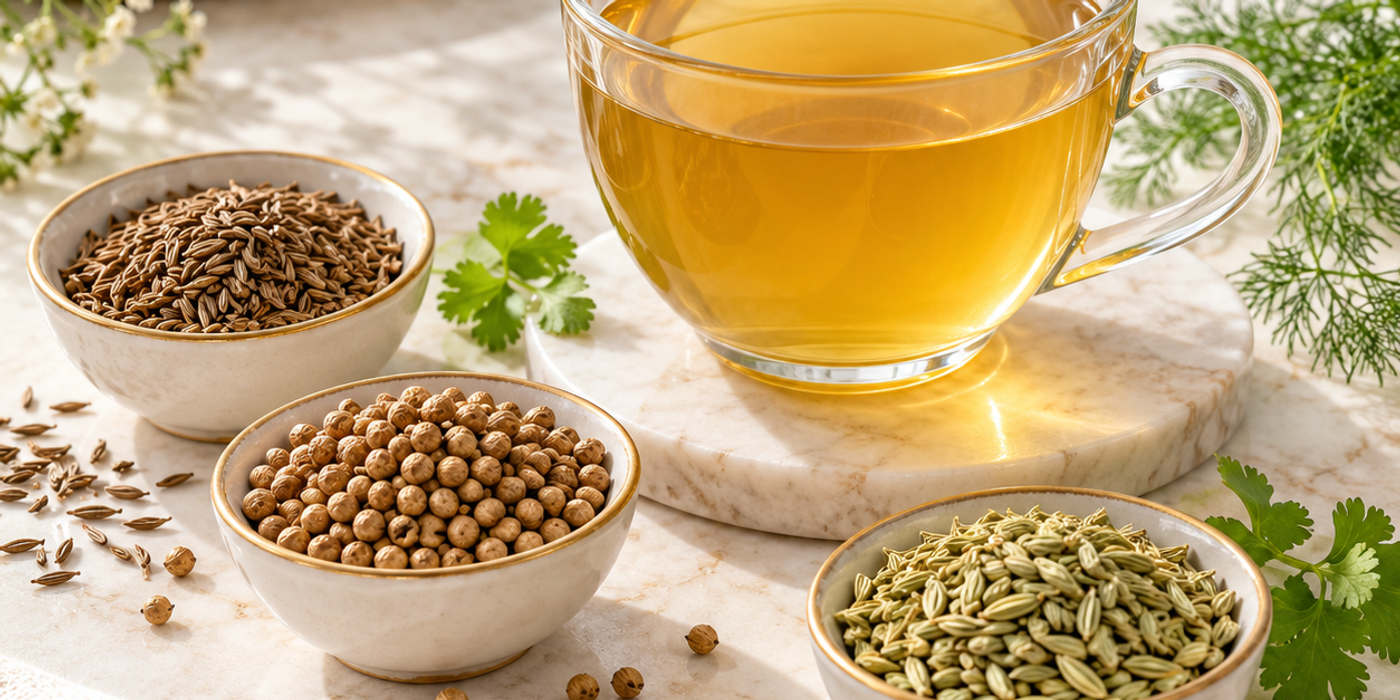
A gently spiced, caffeine-free seed infusion, traditionally taken after meals as part of an Ayurvedic digestive routine.
Helps with

By PranaJiva
Editorial Team
- Form
- Tea or drink
- Preparation
- 12 minutes
- Makes
- 2 cups, about 400–450 ml depending on how hard it simmers
- Best time
- After food, Evening
What you need
- 2½ cups Water
- ½ tsp Whole cumin seeds (jeera) (lightly crushed)
- ½ tsp Whole coriander seeds (dhaniya) (lightly crushed)
- ½ tsp Whole fennel seeds (saunf) (lightly crushed)
How to make it
Crush the three seeds lightly — a pestle or the flat of a knife is enough. You want them cracked open, not powdered.
1 minute
Bring the water to a boil, add all three seeds, lower the heat and let it simmer covered.
7 minutes
Turn off the heat and leave it covered to steep.
3 minutes
Strain into two cups and drink it comfortably warm.
1 minute
How much, and how often
Half a cup to one cup after a meal, as often as you enjoy it. This is an everyday beverage rather than a course of treatment — there is no dose to build up to and no schedule to keep.
Best taken: After food, Evening
When to expect a change: The warmth and the aroma are the whole of it, and both are immediate. Nothing here is expected to clear a symptom, so do not sit waiting for one.
Why it works
Why these three seeds
Jeera, dhaniya and saunf are the three seeds almost every Indian kitchen already has, and the combination of them is one of the oldest after-meal habits in the country. Ayurveda discusses the grouping in relation to agni — the digestive fire — and frames it as something that keeps a meal moving rather than something that fixes a problem.
That framing is worth taking literally. The evidence for treating a diagnosed digestive disorder with this specific tea is thin, and nothing about the three seeds together has been shown to do more than the pleasant, warming, aromatic thing you can taste it doing. Crushing them is the only step that changes the result much: whole seeds keep most of their oils sealed in, and the tea comes out weak.
Before you try this
Do not use if
- You are allergic to cumin, coriander or fennel, or to other plants in the carrot family — celery, dill, anise, caraway.
Take care
- Stop if it makes reflux, nausea or discomfort worse rather than better.
- Keep it at food-level strength. Brewing it heavily and drinking it to a schedule for weeks turns a kitchen tea into a self-prescribed treatment, which is not what this is.
- Persistent stomach pain, vomiting, blood in the stool or unexplained weight loss are reasons to see a doctor, not reasons to brew this more often.
- Pregnancy, breastfeeding & children
- Cooking with these three spices is not the same as drinking a concentrated infusion of them. Ask your doctor before taking this regularly in pregnancy or while breastfeeding, or before giving it to a child.
- How long is too long
- There is no course to finish. If you are reaching for this daily for weeks because something is not settling, that is the point to have it looked at rather than to keep brewing.
This is traditional Ayurvedic guidance shared for general wellbeing. It is not a diagnosis and not a substitute for medical advice. If a symptom is severe, persistent or worsening, or you are pregnant, taking prescribed medicine or managing a diagnosed condition, speak to a qualified doctor before trying it.
Pairs well with this
Other ways to approach the same thing.
- Remedy· Teas & Decoctions
Ajwain & Saunf Kadha
An aromatic carom-seed and fennel decoction, built on the familiar Indian habit of chewing spices after a meal.
Tea or drink · 10 min to make
- Remedy· Teas & Decoctions
Pudina & Saunf Tea
A fragrant mint and fennel infusion, taken after lunch in the way the spice bowl at the door of a restaurant is taken.
Tea or drink · 8 min to make
More in Teas & Decoctions
- Remedy· Teas & Decoctions
Ajwain & Saunf Kadha
An aromatic carom-seed and fennel decoction, built on the familiar Indian habit of chewing spices after a meal.
Tea or drink · 10 min to make
- Remedy· Teas & Decoctions
Lemongrass & Ginger Tea
A bright, citrus-scented cup warmed with a little ginger — a caffeine-free daily ritual rather than a remedy.
Tea or drink · 10 min to make
- Remedy· Teas & Decoctions
Pudina & Saunf Tea
A fragrant mint and fennel infusion, taken after lunch in the way the spice bowl at the door of a restaurant is taken.
Tea or drink · 8 min to make