Remedy
Hibiscus & Rose Tea
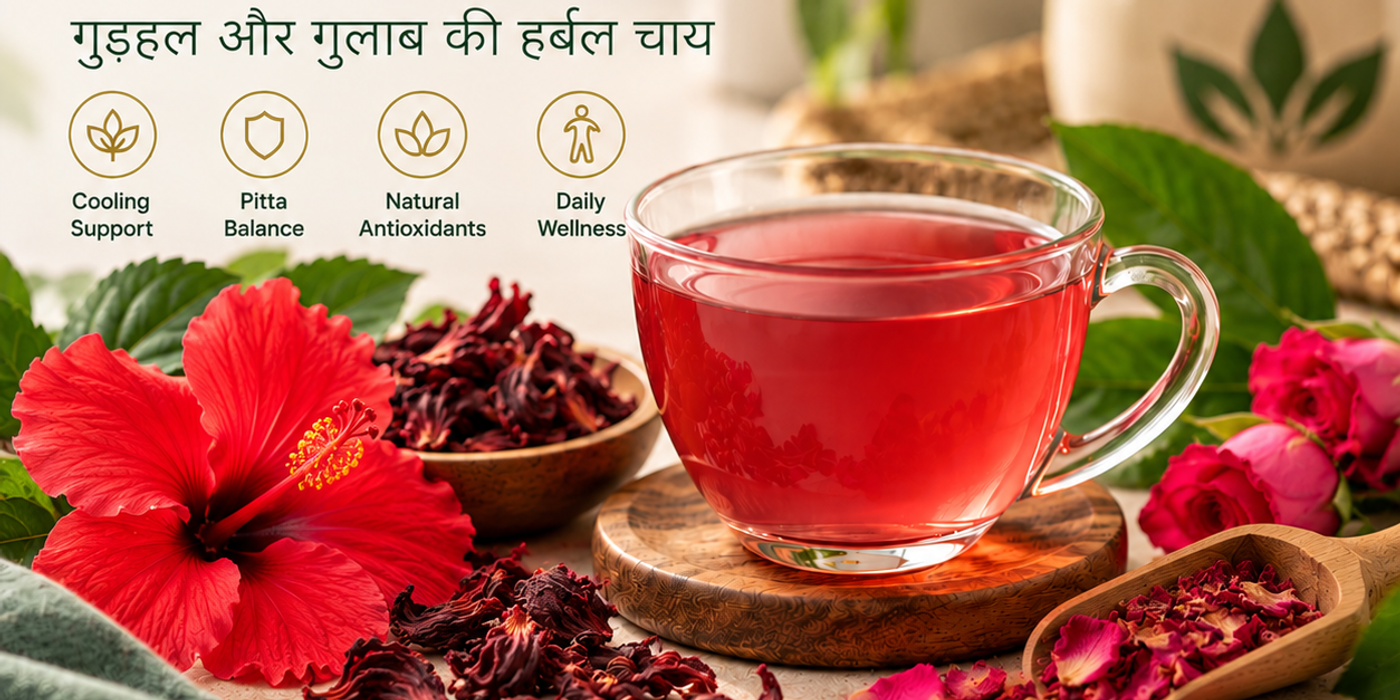
A ruby-red, pleasantly tart caffeine-free infusion, with a little edible rose softening the edge of the hibiscus.

By PranaJiva
Editorial Team
- Form
- Tea or drink
- Preparation
- 8 minutes
- Makes
- 2 cups
- Best time
- Afternoon
- Suits
- Pitta
What you need
- 2 cups Water
- 1 tsp Dried hibiscus calyces (food-grade Hibiscus sabdariffa, not ornamental hibiscus)
- ½ tsp Dried edible rose petals (food-grade and unsprayed)
- to taste Jaggery (a little goes a long way against the tartness, optional)
How to make it
Check that both the hibiscus and the rose are sold as food-grade.
1 minute
Heat the water to a boil, then switch the heat off.
2 minutes
Add the hibiscus and rose, cover, and leave to steep.
4 minutes
Strain promptly — left sitting on the petals it turns sharply astringent. Sweeten lightly if you want to.
1 minute
How much, and how often
One cup, occasionally, warm or cooled. This is not a blood-pressure regimen and should not be drunk as one.
Best taken: Afternoon
When to expect a change: The tartness and the colour are immediate. No health outcome is promised and none should be waited for.
Why it works
Where this one comes from
Hibiscus tea belongs to contemporary wellness drinking far more than to classical Ayurveda — it is karkade in Egypt, agua de jamaica in Mexico, and gudhal in Indian gardens, and the red infusion is drunk across most of the tropics. This is not presented as a traditional Ayurvedic formula, because it is not one.
It also carries the one real pharmacological caution in this set. The blood-pressure effect reported for hibiscus is the reason it turns up in so many wellness lists, and it is also the reason to mention medication before mentioning anything else. The rose is here for balance: hibiscus alone is sharply sour, and a small amount of petal rounds it without sweetening it.
Before you try this
Do not use if
- You are allergic to hibiscus or rose
- You are pregnant, unless your doctor has specifically cleared it
- You take medication for blood pressure and have not checked with your doctor
Take care
- Hibiscus is widely reported to lower blood pressure and may interact with blood-pressure medication. Talk to your doctor before drinking it regularly if you take any, or if your blood pressure already runs low.
- Only Hibiscus sabdariffa — the dried red calyces sold as food — is for drinking. The ornamental hibiscus in the garden is not.
- Steeped too long it becomes unpleasantly sour and astringent rather than stronger in any useful sense.
- Pregnancy, breastfeeding & children
- Avoid regular or concentrated hibiscus in pregnancy and while breastfeeding — the safety evidence is insufficient, which is a reason for caution rather than reassurance. Not recommended for children without medical advice.
- How long is too long
- An occasional drink. Daily therapeutic use is exactly the pattern that needs a doctor's view first, because of the blood-pressure question.
This is traditional Ayurvedic guidance shared for general wellbeing. It is not a diagnosis and not a substitute for medical advice. If a symptom is severe, persistent or worsening, or you are pregnant, taking prescribed medicine or managing a diagnosed condition, speak to a qualified doctor before trying it.
More in Teas & Decoctions
- Remedy· Teas & Decoctions
Cumin, Coriander & Fennel Tea
A gently spiced, caffeine-free seed infusion, traditionally taken after meals as part of an Ayurvedic digestive routine.
Tea or drink · 12 min to make
- Remedy· Teas & Decoctions
Ajwain & Saunf Kadha
An aromatic carom-seed and fennel decoction, built on the familiar Indian habit of chewing spices after a meal.
Tea or drink · 10 min to make
- Remedy· Teas & Decoctions
Lemongrass & Ginger Tea
A bright, citrus-scented cup warmed with a little ginger — a caffeine-free daily ritual rather than a remedy.
Tea or drink · 10 min to make