Remedy
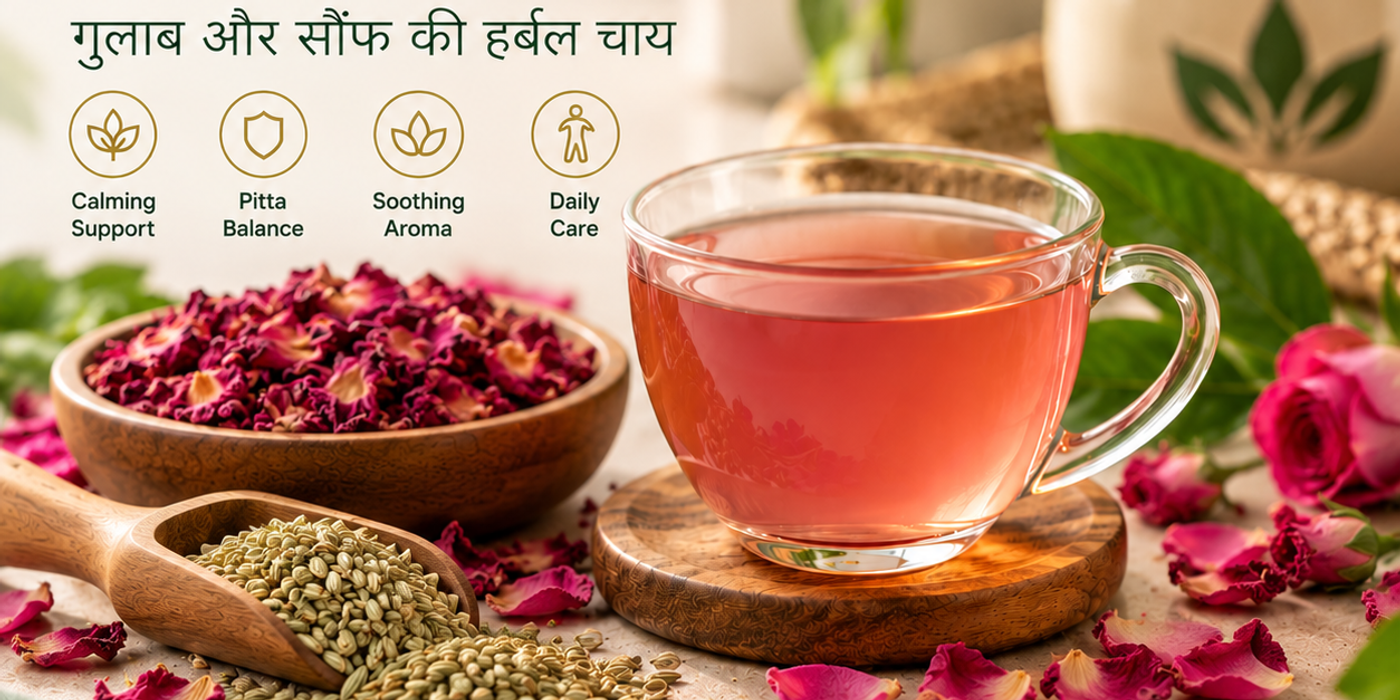
Rose & Fennel Tea
A delicate floral infusion of edible rose petals and fennel, for an evening that is meant to slow down.

By PranaJiva
Editorial Team
- Form
- Tea or drink
- Preparation
- 8 minutes
- Makes
- 2 cups
- Best time
- Afternoon, Evening
- Suits
- Pitta
What you need
- 2 cups Water
- 1 tsp Dried edible rose petals (food-grade and unsprayed — see the cautions)
- ½ tsp Fennel seeds (saunf) (lightly crushed)
- ½ tsp per cup Honey (added only once the cup is warm rather than hot, optional)
How to make it
Crush the fennel seeds lightly.
1 minute
Bring the water to a gentle boil, add the fennel and simmer.
3 minutes
Turn off the heat, add the rose petals, cover and steep. The petals should never boil.
3 minutes
Strain, and stir in the honey once it has cooled to warm if you are using it.
1 minute
How much, and how often
One cup in the evening, as often as you like it. Whether it relaxes you is a personal matter and not a therapeutic effect.
Best taken: Afternoon, Evening
When to expect a change: The scent is immediate. Nothing here treats anxiety or insomnia, and it should not be used in place of something that does.
Why it works
A ritual, described honestly
Rose carries a particular association in Indian tradition — gentleness, coolness, the sort of thing offered at the end of a hot day rather than the start of one. Gulkand and rose water sit in the same family of preparations. Fennel supplies the sweet anise note underneath and keeps the cup from being only perfume.
What this is, then, is a ritual: a warm, fragrant, caffeine-free cup at a time of day when having one is pleasant. That is worth something, and it is a different claim from a sleep aid. The petals go in off the heat for the same reason the mint does elsewhere in this section — boiled, they give up their scent to the room instead of the cup.
Before you try this
Do not use if
- You are allergic to rose, fennel or related plants
Take care
- Use only petals sold as food-grade and unsprayed. Florist roses and decorative potpourri petals are treated with pesticides and fragrance and are not for drinking.
- Honey goes into a warm cup, never a boiling one, and never to a child under one year old.
- Ongoing sleeplessness or anxiety deserves proper attention. A pleasant evening ritual is a good thing to have alongside that, not instead of it.
- Pregnancy, breastfeeding & children
- Ask a qualified clinician before taking concentrated floral infusions regularly in pregnancy or while breastfeeding. Honey must never be given to a child under one year old.
- How long is too long
- No limit worth stating for an occasional cup. Persistent insomnia or anxiety is the thing to act on, and this is not the action.
This is traditional Ayurvedic guidance shared for general wellbeing. It is not a diagnosis and not a substitute for medical advice. If a symptom is severe, persistent or worsening, or you are pregnant, taking prescribed medicine or managing a diagnosed condition, speak to a qualified doctor before trying it.
More in Teas & Decoctions
- Remedy· Teas & Decoctions
Cumin, Coriander & Fennel Tea
A gently spiced, caffeine-free seed infusion, traditionally taken after meals as part of an Ayurvedic digestive routine.
Tea or drink · 12 min to make
- Remedy· Teas & Decoctions
Ajwain & Saunf Kadha
An aromatic carom-seed and fennel decoction, built on the familiar Indian habit of chewing spices after a meal.
Tea or drink · 10 min to make
- Remedy· Teas & Decoctions
Lemongrass & Ginger Tea
A bright, citrus-scented cup warmed with a little ginger — a caffeine-free daily ritual rather than a remedy.
Tea or drink · 10 min to make